
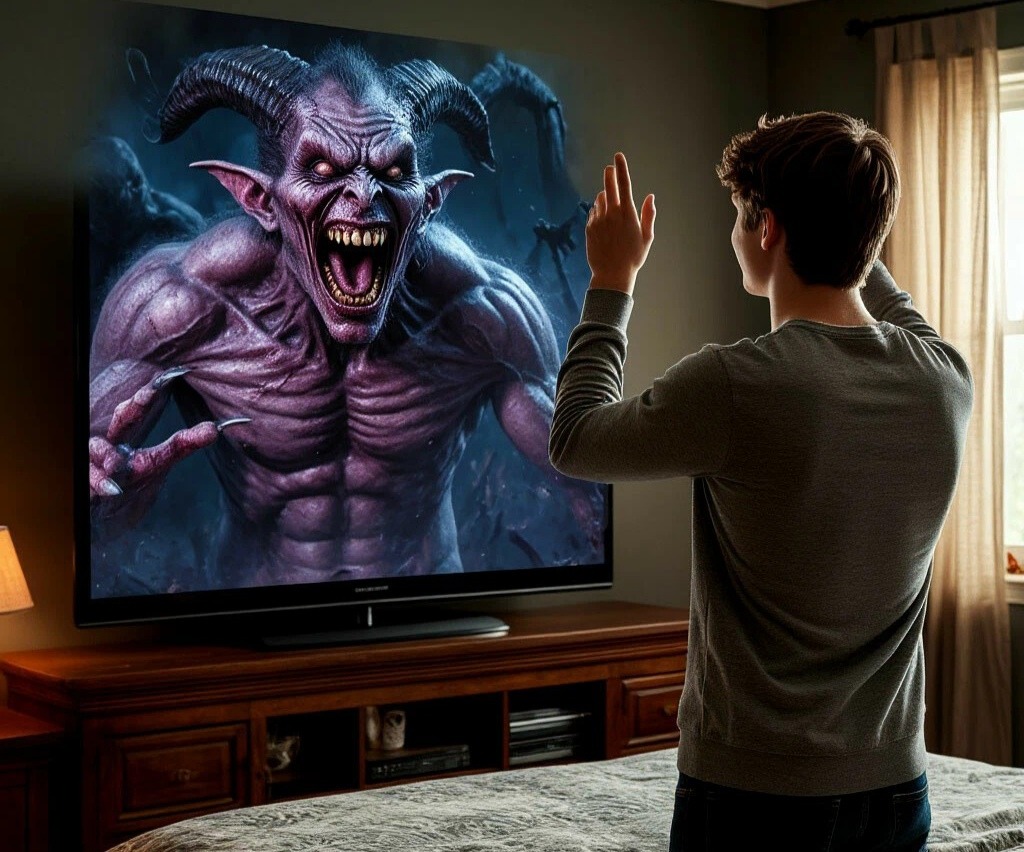
Researchers from China, led by CAO Zhihui, have devised an installation that consists of three screens to simulate the control experienced in lucid dreams. The left screen displays “rational vision,” ordered visuals with geometric figures and clear lines. On the right screen, which represents “emotional stimulation,” AI-generated videos are intended to evoke strong feelings. These videos were created based on people’s descriptions of nightmares. Finally, the rear screen presents a “general dream simulation,” a stream of fragmented memories and images of real life overlaid with the effects of old film and hand-drawn sketches.
The main feature of the installation is the viewer’s ability to influence what happens on the two front screens. Cameras track the visitor’s hand movements, and the video clips displayed on the screens change depending on the position of the hands. Thus, the viewer can switch between different videos, creating unique combinations of “rational” and “emotional” dreams and simulating control over a lucid dream.
The project was the result of a survey involving 74 participants, of whom 58% had experienced lucidity in a dream at least once. The authors identified the five most common themes in lucid dreams: chases as flights or unusual movements, strange or scary scenarios, prophetic dreams, and stress related to work or study. In these dreams, creative people often seek inspiration for drawing or writing, among other artistic endeavors.
What do you think: could such simulations be useful as a training method for lucid dreamers?
The article was published in June 2025 on RAY LC.
Get all the latest news about lucid dreams via our channels on Telegram, Facebook, Twitter


