
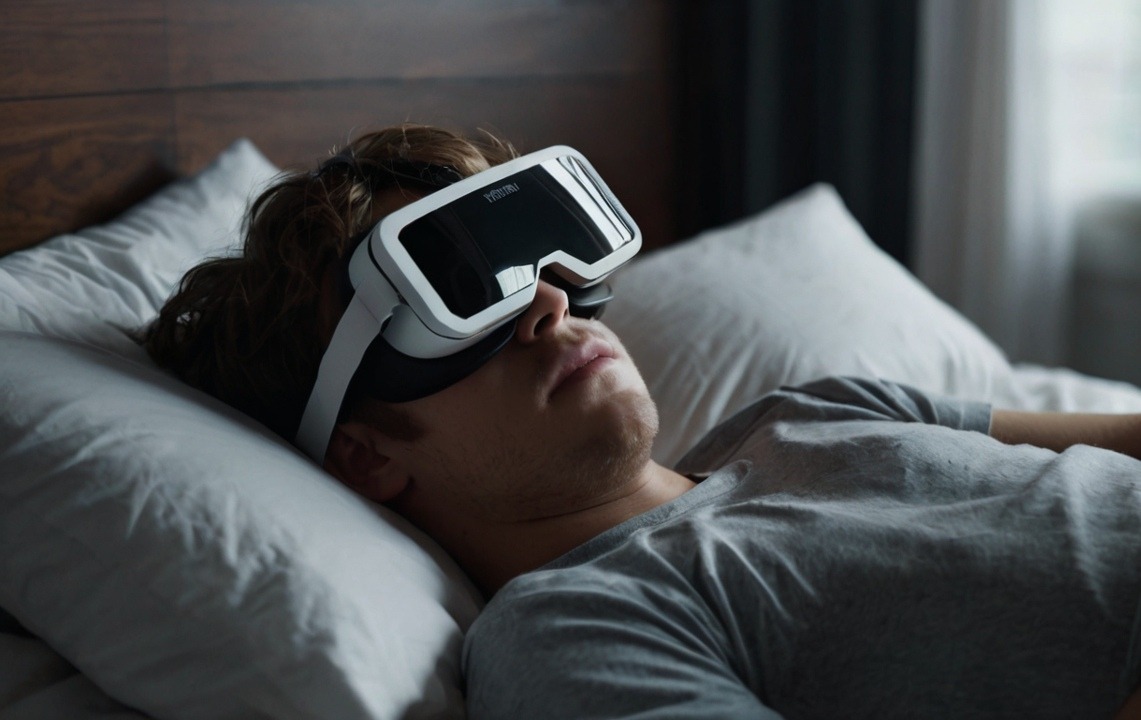
Imagine stepping into a dream as if it were a video game—only it’s a game that you get to program it in advance. Scientists from the US, Australia, and Spain have set out to use virtual reality as a tool for inducing lucid dreams, aiming to make them more meaningful and therapeutically rich. The project is led by Daniel Morris, and the research team includes well-known lucid dream researchers Karen Konkoly and Ken Paller.
Four experienced lucid dreamers participated in two sessions inside a custom-designed VR environment created to enhance feelings of connection, both with others and with the world as a whole. Afterward, participants slept in a sleep lab, where sounds from the VR experience were replayed while they were in REM sleep. The participants’ brain activity was tracked via polysomnography, and they signaled the onset of lucidity through specific eye and breathing movements. Upon waking, they gave detailed post-dream interviews.
Three of the four participants reported having lucid dreams that included elements from the VR session. Notably, all participants described a heightened sense of connection and compassion. Some even reported increased sensitivity to smells and physical sensations while awake. The researchers believe this fusion of VR and lucid dreaming opens new possibilities for psychotherapy—especially for treating nightmares and trauma. Specifically, VR can be used to craft specific imagery and emotional contexts that can later be deepened and reinterpreted within the lucid dream state.
Have you ever found yourself in a lucid dream inspired by a VR experience, video game, film, or book?
The preprint of the article was published in June 2025 on OSF.
Get all the latest news about lucid dreams via our channels on Telegram, Facebook, Twitter


